
Torosa Saline-Filled Testicular Prosthesis
Empowering Survivors Beyond the Standard
It’s more than cosmetic. For testicular cancer survivors, the physical and emotional trauma from the removal of a testicle may result in long-lasting feelings of loss, uneasiness or shame. Simply providing the option for a testicular prosthesis may help alleviate these effects and assist in their overall recovery.1
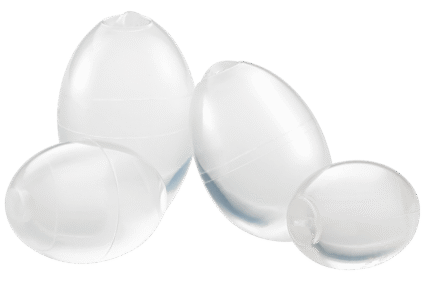
Restoring confidence after cancer
Testicular prostheses have been reported by numerous investigators to result in psychological benefits and high levels of patient satisfaction.

A testicular implant may help alleviate feelings of loss, uneasiness, and shame resulting from orchiectomy. It is designed to help restore a more natural look and feel of the testicles in the scrotum. Discussing a testicular implant early in patient consultation and considering concurrent placement may reduce the emotional impact of orchiectomy and assist patients in their overall recovery.
Beyond the standard
Clinical studies recommend all patients undergoing orchiectomy should be offered a testicular implant, regardless of age.2 Adopting this “new standard” in your practice can help empower survivors through shared decision-making about their life after cancer.

Offering an implant
It matters. While nearly all testicular cancer patients say they would want to be offered the option of an implant, less than half of them are.4

98%
believe it’s
“important” to be
offered one, whether
they accept it or not3
50-60%
report improved
body image, after
testicular prosthesis
placement4
93%
of Torosa® testicular prosthesis patients reported a high level of patient satisfaction, in core clinical studies5
Testicular cancer patients have a 20% higher risk of suicide
than the general population6

32%
of survivors say
they missed
their removed
testicles1

26%
have feelings of
uneasiness or
shame about
their body1

24%
are less
interested in sex
than they used
to be7

43%
experience
reduction
in sexual
activity7
Beating cancer is just the beginning
When a person is diagnosed with testicular cancer, removing the cancer by orchiectomy is often the primary focus for both the
patient and their doctor. While survival is the focus, physical and emotional recovery are important. Survivorship goes beyond
surgery, to helping these patients move forward and thrive in their life after cancer treatment and orchiectomy.
Freeman, Torosa Implant Recipient
The physical and emotional impact of losing a testicle can be more significant than physicians may realize.
The implant you can trust for your patients
As the only FDA-approved testicular implant on the market, Torosa testicular prosthesis has been rigorously tested and clinically proven to be a safe and effective treatment for your patients.
Testicular prostheses are safe to implant at the time of orchiectomy for testicular cancer.8 The Torosa prosthesis can be implanted with few complications and with a low or absent risk of rheumatological disease.9
Features:
- Features molded silicone elastomer shell
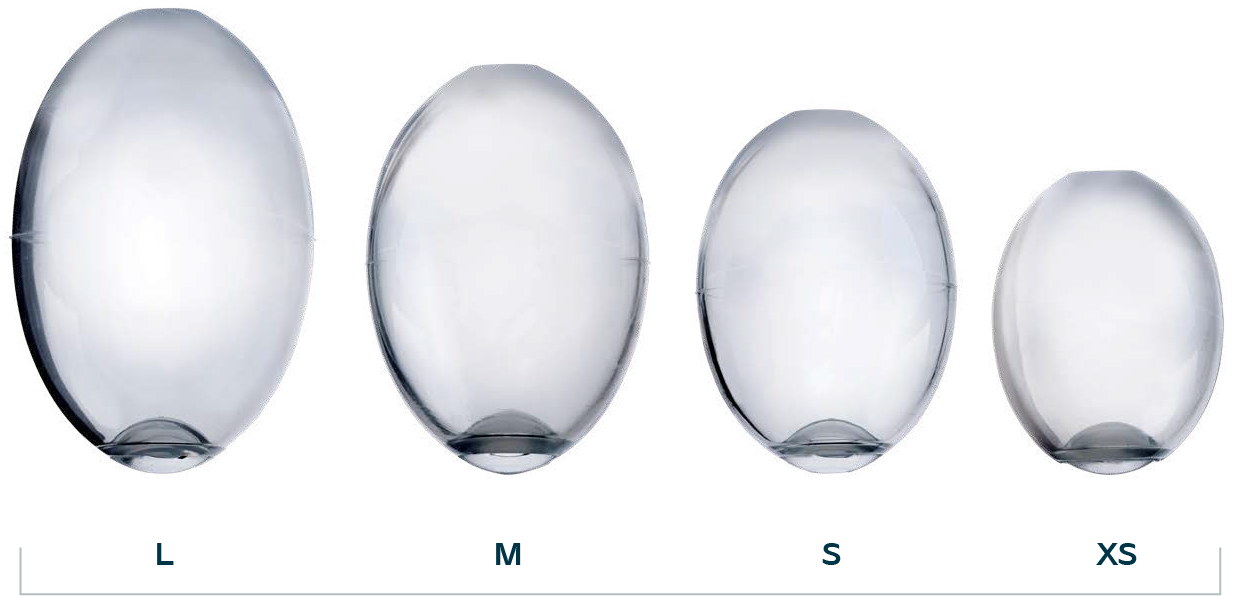
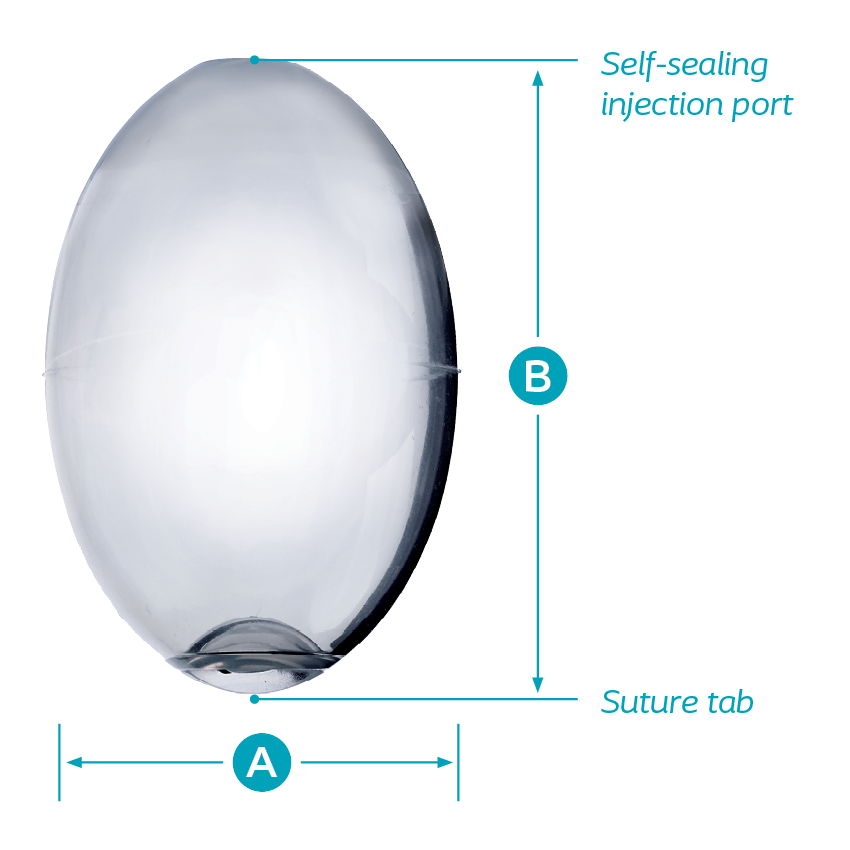
- Available in 4 sizes to meet the needs of adult, adolescent, and pediatric patients (see A & B dimensions on sizing guide)
- Suture tab enables secure placement of the device in a set position, if desired, eliminating unwanted movement within the scrotum
- Self-sealing injection port allows for filling the device with sterile saline solution
- Skoogh J, Steineck G, Cavallin-Ståhl E, Wilderäng U, Håkansson UK, Johansson B, Stierner U; SWENOTECA. Feelings of loss and uneasiness or shame after removal of a testicle by orchidectomy: a population-based long-term follow-up of testicular cancer survivors. Int J Androl. 2011 Apr;34(2):183-92.
- Adshead J, Khoubehi B, Wood J, Rustin G. Testicular implants and patient satisfaction: a questionnaire-based study of men after orchidectomy for testicular cancer. BJU Int. 2001 Oct;88(6):559-62.
- Dieckmann KP, Anheuser P, Schmidt S, Soyka-Hundt B, Pichlmeier U, Schriefer P, Matthies C, Hartmann M, Ruf CG. Testicular prostheses in patients with testicular cancer -acceptance rate and patient satisfaction. BMC Urol. 2015 Mar 13;15:16.
- Hayon S, Michael J, Coward RM. The modern testicular prosthesis: patient selection and counseling, surgical technique, and outcomes. Asian J Androl. 2020 Jan-Feb;22(1):64-69.
- Clinical data on file at Coloplast Corp. and within the device labeling.
- Alanee S, Russo P. Suicide in men with testis cancer. Eur J Cancer Care (Engl). 2012 Nov;21(6):817-21.
- Rossen P, Pedersen AF, Zachariae R, von der Maase H. Sexuality and body image in long-term survivors of testicular cancer. Eur J Cancer. 2012 Mar;48(4):571-8.
- Robinson R, Tait CD, Clarke NW, Ramani VA. Is it safe to insert a testicular prosthesis at the time of radical orchidectomy for testis cancer: an audit of 904 men undergoing radical orchidectomy. BJU Int. 2016 Feb;117(2):249-52.
- Turek, Paul J. et al. Safety and Effectiveness of a New Saline Filled Testicular Prosthesis. J Urol. 2004; 172:1427 – 143.
Ordering information
For ordering information, please call 800-258-3476.
Torosa® Saline-Filled Testicular Prosthesis
| Size | Order number | Dimension A | Dimension B | Over-fill volume range | Final-fill volume range | ||
|---|---|---|---|---|---|---|---|
| Lower limit | Upper limit | Lower limit | Upper limit | ||||
| Extra small | 450-1323 | 2.2 cm | 3.0 cm | 7 cc | 9 cc | 5 cc | 6 cc |
| Small | 450-1325 | 2.5 cm | 3.5 cm | 10 cc | 12 cc | 8 cc | 9 cc |
| Medium | 450-1327 | 2.7 cm | 4.0 cm | 13 cc | 15 cc | 11 cc | 12 cc |
| Large | 450-1329 | 2.9 cm | 4.5 cm | 17 cc | 19 cc | 15 cc | 16 cc |
Only use sterile, isotonic, pyrogen-free Sodium Chloride U.S.P. solution for injection to fill the implant.